Transitioning to Power Paragliding (PPG): What a P2 Pilot Needs to Know About Reflex Wings
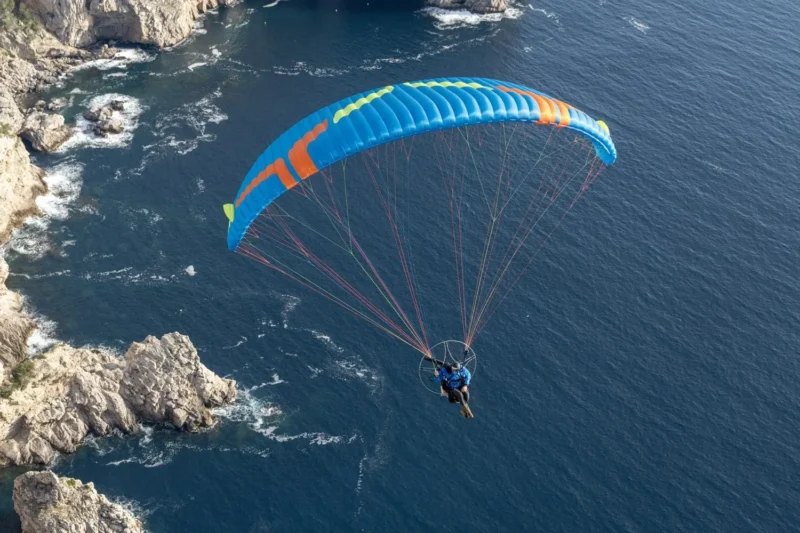
Reflex wings for paramotoring represent a fundamental shift in wing technology that every P2 pilot must understand before adding a motor. For many paraglider pilots, the lure of the motor is simple: more flight time and the ability to explore when the thermals aren’t working. However, moving from a standard paragliding wing to a dedicated reflex wing for paramotoring like the Ozone Roadster 4 involves critical safety considerations.
What is Reflex Technology?
In a standard paragliding wing, the profile is designed for lift and glide efficiency. When you encounter turbulence or increase speed, the center of pressure moves, which can make the wing more susceptible to collapses.
A reflex profile changes the game. In a reflex wing, the trailing edge (the back of the wing) is designed to turn slightly upward when the trimmers are released. This creates “autostable” behavior.
Why this matters for paramotoring:
1. Pitch Stability: As you add power and speed, the reflex profile actually becomes more stable. The wing “pushes back” against collapses.
2. Speed Range: Reflex wings allow for much higher top-end speeds, which is essential for cross-country paramotoring and overcoming headwinds.
3. Internal Pressure: The shark-nose technology and reflex design keep the wing pressurized even at high speeds, reducing the workload for the pilot in bumpy air.
The Difference: Standard PG vs. Reflex PPG
While you can fly some paragliding wings under power, a dedicated reflex wing like the Roadster 4 is built for the specific physics of a motor:
Launch: Optimized for the extra weight of a frame and fuel.
Handling: Designed to handle the torque and thrust of a motor without excessive oscillation.
Landing: Engineered to flare effectively even with the higher wing loading of a paramotor kit.
The Real Talk: Why Training Matters
Here’s the thing that doesn’t get said enough in gear reviews and YouTube videos: adding a motor fundamentally changes your relationship with the wing. You’re not just catching rides anymore—you’re generating your own thrust, managing torque effects, carrying extra weight, and dealing with the unique physics of powered flight.
At Let’s Go Paragliding, we’ve seen too many talented P2 pilots assume their free-flight skills will automatically translate to powered flight. Some do. Many don’t. The difference? Proper training.
Our Policy: We only sell ppg wing like the Ozone Roadster 4 to pilots with a verified USPPA rating (or equivalent). This isn’t about creating barriers—it’s about keeping you in the air for the long haul.
We support the school system because we want you to be a pilot for life, not just for a season.
What You’ll Learn in Paramotor Training
A good paramotor course will cover what your P2 didn’t:
- Managing torque and weight shift during powered flight
- Understanding trim settings and how they affect reflex behavior
- Fuel management and range planning
- Motor-specific emergency procedures
- The unique ground handling characteristics of heavier setups
For deeper insights into powered flight techniques and safety, we recommend the PPG Bible , Understanding the sky, or the DVD Airspace & Law for Ultralights are essential resources for every paramotor pilot.
The reflex wing is an incredible piece of engineering. It opens up flying possibilities that would be impossible on a standard PG wing. But like any specialized tool, it requires specialized knowledge to use safely and effectively.
Ready to Make the Transition to Reflex Wings for Powered Flight?
If you’re a P2 pilot looking to add power to your flying, we’d love to help you do it the right way. Understanding reflex wings for paramotoring is just the first step—proper hands-on training with qualified instructors is essential.
Whether you’re exploring local training options or already enrolled in a course, we’re here to answer questions about gear selection, wing sizing, and what to expect from your first reflex wing.
Because at the end of the day, the best gear in the world doesn’t mean much without the skills to use it properly.
Ready to start your powered journey? find a USPPA training course near you.
Browse a selection from our farorite PPG brands of certified reflex wings for paramotoring :
Gin paramotor wings
Ozone Paramotor Wing
We have one Roadster 4 22 new in stock color blue
Have questions about transitioning to powered flight? Reach out to our team at Let’s Go Paragliding—we’re pilots first, retailers second.
Fly safe. Fly trained. Fly often.
Frequently Asked Questions About Reflex Wings for Paramotoring
Q: Can I use my P2 paragliding wing with a motor? A: While some EN-B wings can be flown under power briefly, PPG wings have better designs specific to PPG. A dedicated reflex wings for paramotoring provide easier take off and landing and more stability using trims.
Q: Are reflex wings harder to launch than regular paragliding wings? A: They respond differently to control inputs. You want to master using trims. Proper paramotor training makes this a non-issue.
Q: How much does paramotor training cost? A: Most comprehensive USPPA courses range from $2,500-$4,000, including equipment rental. This investment in proper reflex wing training pays dividends in safety.
Q: Can I thermal with reflex wings for paramotoring? A: Yes! Many modern reflex wings like the Roadster 4 thermal quite well, especially when trimmers are set to the slow/reflex-off position. This makes them versatile for both powered and soaring flight.
Q: What’s the lifespan of reflex wings? A: With proper care, similar to standard paragliding wings. It can vary widely depending on the pilot care. UV exposure, extended storage and rough landings are the main factors affecting longevity.